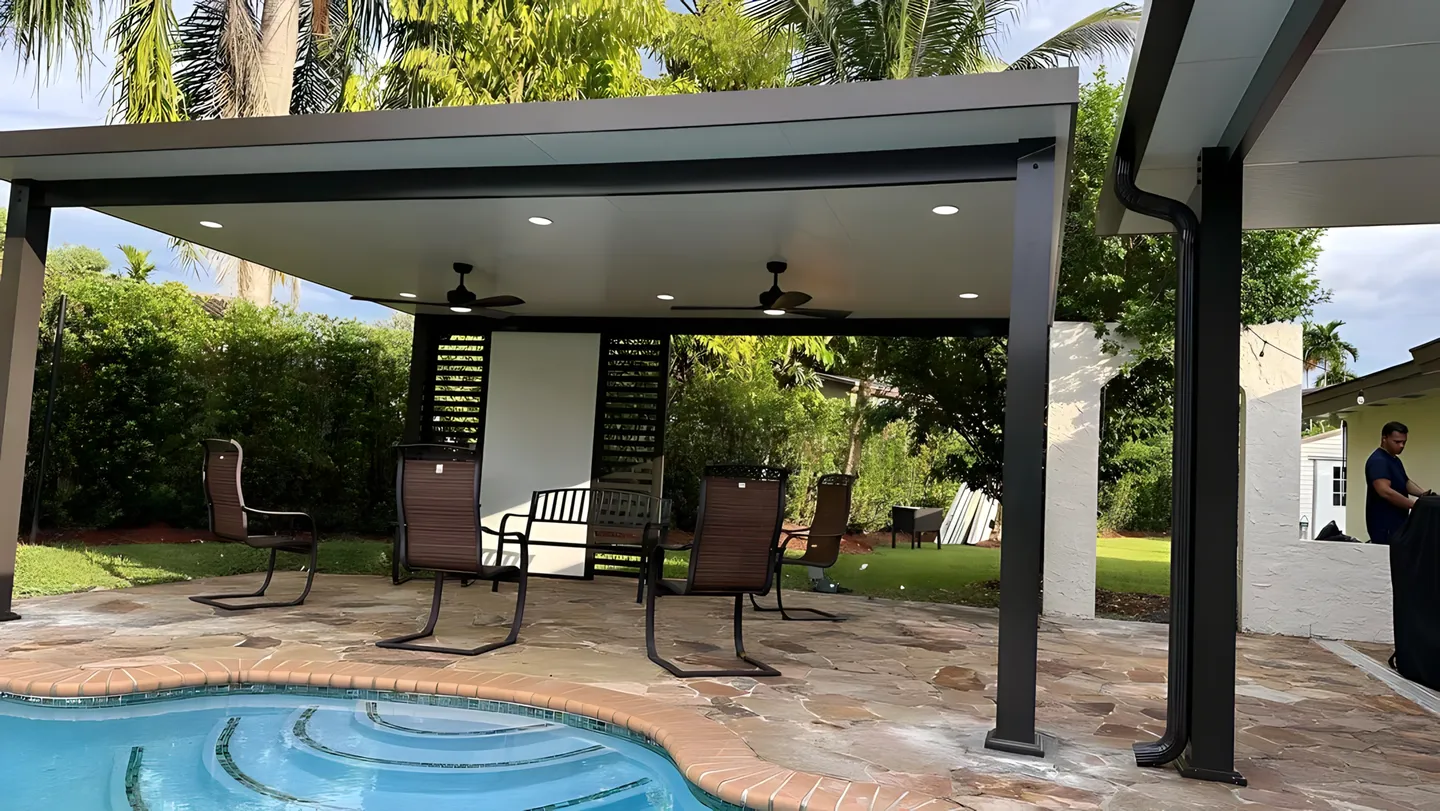
Choose outdoor materials you will enjoy living with.
The best material conversation goes beyond a beautiful sample. Think about exposure, everyday use and the care you are willing to give your outdoor space.
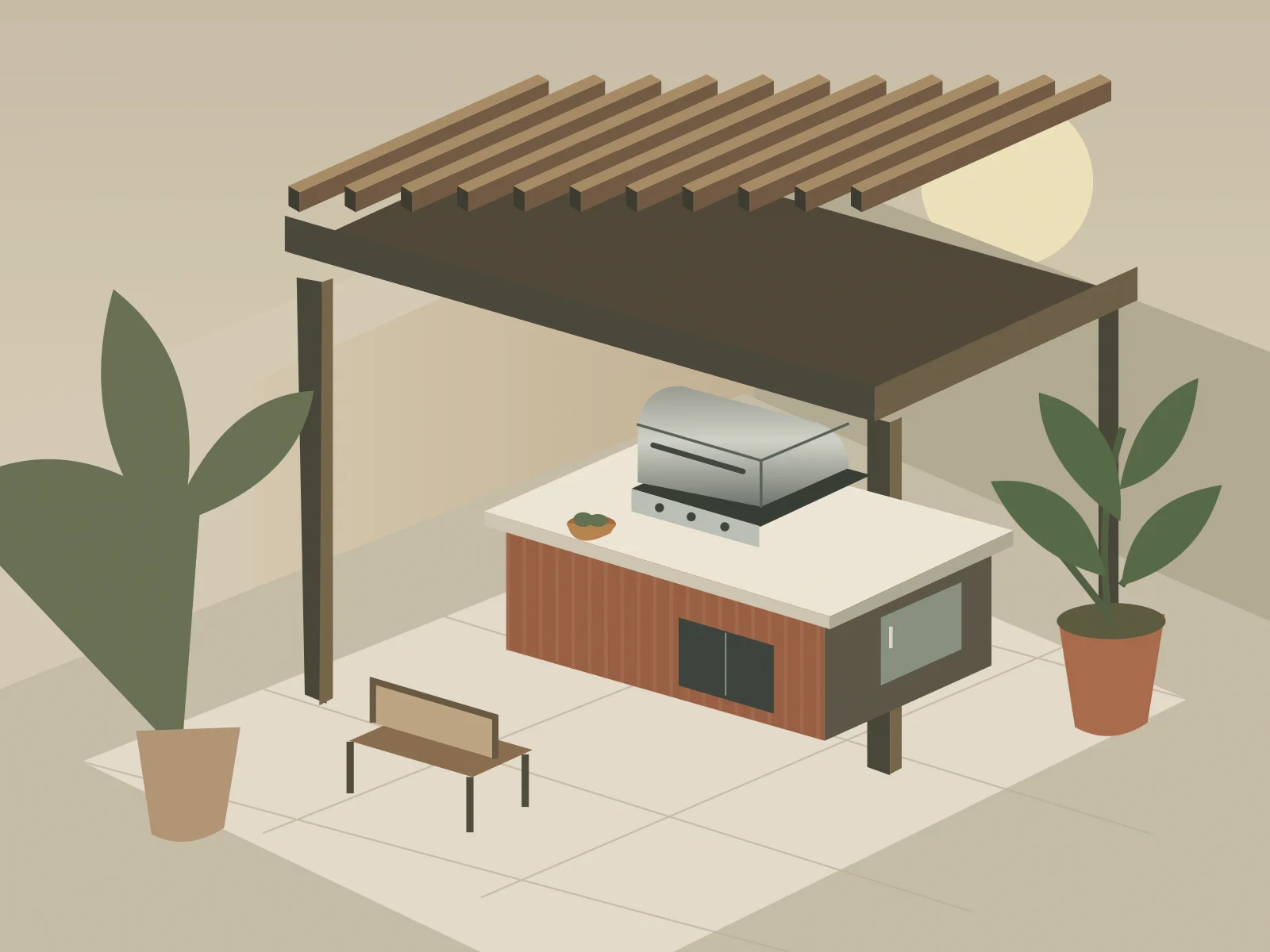
Describe the setting before choosing the finish
Begin with where the material will live. Is the outdoor kitchen open to the sky, partly sheltered, or beneath a proposed structure? What time of day reaches it with direct sunlight? Is it close to irrigation, landscaping or a pool? These observations help frame the discussion with the supplier and installer. They do not replace product specifications, but they make it easier to ask whether a proposed selection is appropriate for the actual conditions.
Take wide photographs as well as close ones. A close view of a sample says little about the way the whole patio works. If you are changing the surroundings at the same time, explain those plans. A material selected for today’s shaded corner may be used differently after a landscape or structural change. Ask for the suitability of the exact product to be confirmed rather than assuming that every product within a broad category performs identically.
Treat countertop names as a starting point
Stone, porcelain and other surface descriptions can cover many different products and finishes. Instead of asking only which category is best, ask how the specific selection is intended to be used outdoors. Request information about exposure, cleaning, staining, support, edges and any restrictions near appliances. A supplier should be able to point you toward relevant documentation. Keep that information with your project records so future maintenance does not depend on remembering a showroom conversation.
Look at a physical sample in the proposed location when possible. Compare it with the house, patio and cabinet finish at different times of day. Think about how the texture will feel during preparation and cleanup, and ask what the chosen edge requires. No small sample can represent every detail of a finished installation, especially with natural variation. Ask how the final material and layout will be reviewed before fabrication begins.
Ask about the parts you cannot see
Cabinet faces and countertops get most of the attention, but the supporting system deserves equal consideration. Ask what the base is made of, how it is intended to perform outdoors and how access is maintained for appliances or utilities. The specification should explain more than the visible color. Hardware, fasteners and attachment details need to be compatible with the proposed system and the installation conditions. These are questions for the responsible supplier or installer.
For an appliance enclosure, use the appliance manufacturer’s instructions as part of the review. A surface being suitable outdoors does not establish that it is suitable beside a grill. Heat clearances, insulation and ventilation may depend on the exact product and assembly. Napoleon’s product-specific liner information illustrates why this cannot be settled by the appearance of a cabinet. Confirm compatibility before approving the enclosure, and do not treat a general planning article as technical installation guidance.
Be realistic about cleaning habits
Think about what happens after an ordinary meal. Will you wipe down the kitchen immediately or return to it the next morning? Do you prefer a simple care routine, or are you comfortable with periodic specialist attention? Share those preferences before choosing a finish. There is no benefit in selecting a surface whose recommended maintenance you already know you will avoid. Ask for a written routine that distinguishes everyday cleaning from occasional care.
For natural stone, the Natural Stone Institute recommends products suited to the stone and cautions against inappropriate cleaners. Its consumer resources are a useful starting point, but the exact surface and treatment still matter. Do not apply a product simply because its label says kitchen cleaner. Read the material supplier’s instructions and ask if the cleaner is appropriate for your finish. Keep instructions for appliances separate from instructions for countertops and cabinetry.
Build a simple care folder
Create a digital folder before the project is finished. Include appliance model numbers, manuals, finish names, invoices and any written warranty documents. Add the countertop or cabinet supplier’s care information and the names of approved cleaning products if provided. A few organized files can save considerable confusion when a part needs attention or someone else takes over maintenance. Property managers can share the relevant instructions with the people responsible for routine cleaning.
Photograph the finished details and keep a record of any later changes. If you replace a product or use a new cleaner, retain its instructions too. Avoid mixing advice for different materials: a method that is appropriate for one surface may be unsuitable for another. If you notice discoloration, a loose component or unexpected damage, document it and contact the relevant professional before experimenting with aggressive cleaning or a repair method found online.
Read warranty terms alongside the specification
A warranty headline is not the same as a complete explanation of coverage. Ask which product is covered, who provides the warranty and what conditions apply. Outdoor exposure, maintenance requirements, installation method and exclusions may matter to the terms. Request the actual documentation before making a decision. Do not assume that an appliance warranty also covers adjacent construction, or that a material warranty describes every responsibility of the installer.
Keep expectations specific. Ask how a claim would be raised, what information you would need and who your first point of contact would be. For any workmanship terms offered with your project, ask for a separate written explanation. Bash does not publish a blanket warranty promise on this site; applicable terms should be discussed for the actual scope. Understanding the boundaries is part of choosing a product you can confidently care for.
Choose a coherent palette, then verify the details
A restrained palette can make an outdoor kitchen feel connected to the home without matching every surface exactly. Start with the existing architecture and choose which element should lead visually. Bring the countertop, cabinet and structural finish samples together before deciding. Consider whether a proposed pergola will change the light or the view of those finishes. Visual harmony is useful, but it should follow the practical suitability questions, not replace them.
Bring your short list and maintenance preferences to your estimate conversation. Ask what products are available for the proposed scope and which documentation can be reviewed before selection. Our outdoor kitchen and pergola pages explain the broader planning questions, while the free estimate form lets you share your city and a photograph of the space. The aim is a set of materials that makes sense for both your design and your everyday life outside.
- Natural Stone Institute: Care and cleaning resources ↗
- Napoleon: Product-specific zero-clearance liner information ↗
General planning guidance. Product instructions and requirements for your address and scope take precedence. Manufacturer links are informational and do not imply a Bash partnership or product offering.
Let’s put your ideas in context.
Explore outdoor kitchens, grills and pergolas, or see our Boca Raton planning guide. Ready to talk about your own space?
Get a Free Estimate